Maintenance•May 19, 2026
Weatherstripping & Bottom Seal Replacement: A Complete Guide
Written by Robert M. (Westside Dispatch) · 5 min read
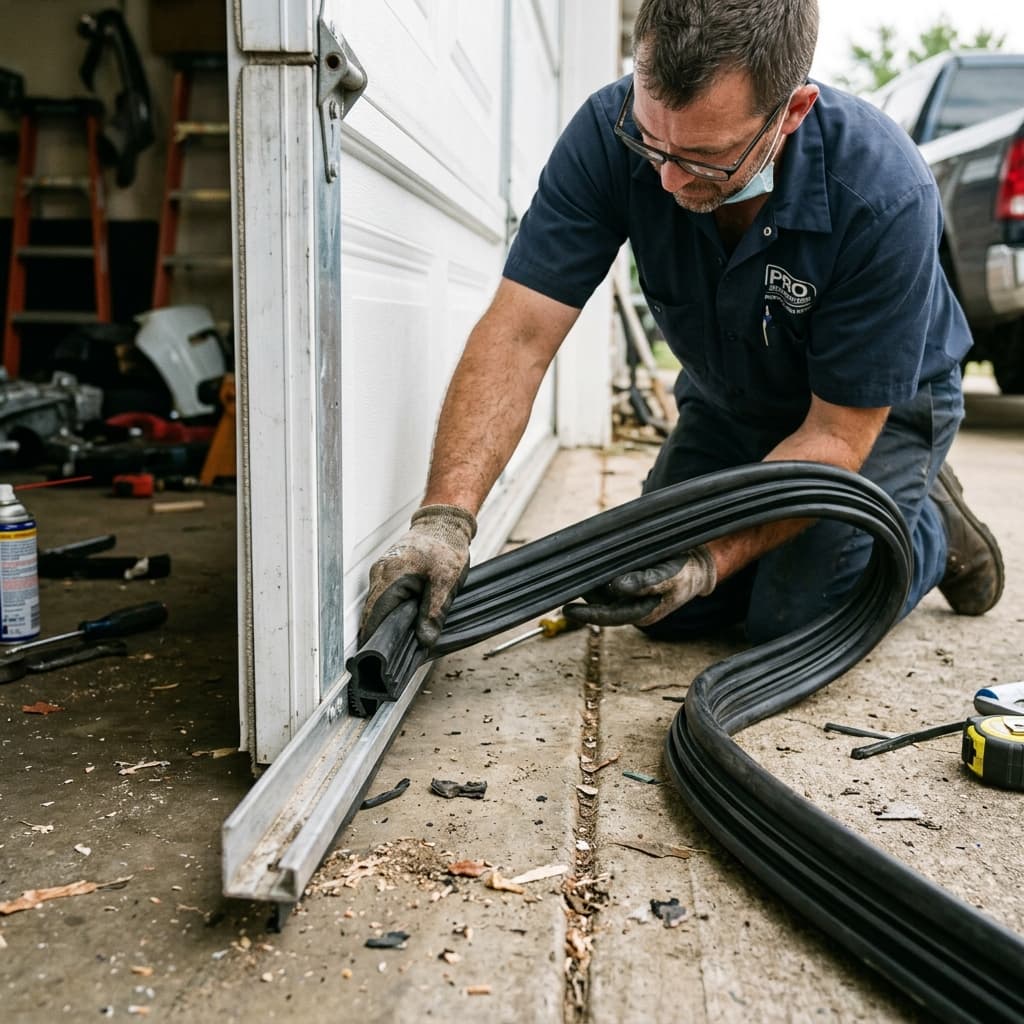
A garage door bottom seal serves as a barrier against rain, hot Valley wind, pests, and debris. Over time, baking sun exposure and friction against abrasive concrete cause the rubber seal to shrink, crack, and tear, leaving gaps at the corners.
Selecting the Best Bottom Seal Material
When upgrading your seal, choose a material that can withstand high temperatures:
- Standard Vinyl: Cost-effective but prone to stiffening and cracking in extreme heat or cold.
- Synthetic EPDM Rubber: Highly flexible, durable, and resistant to oil, extreme heat, and ozone breakdown. Perfect for California garages.
- U-Shape Track Seals: Slopes into a aluminum retainer track. It compresses tightly to seal uneven concrete floors.
Installing the New Seal Step-by-Step
Clean out the bottom aluminum retainer channel with a wire brush and spray soapy water inside. Slide the new T-end or U-shape rubber seal through the channel, leaving an extra inch on both ends. Tuck the excess rubber inside to prevent shrinkage over time.