Torsion Springs Safety Guide: High-Tension Mechanics
Written by Elias K. (Access Systems Engineer) · 7 min read
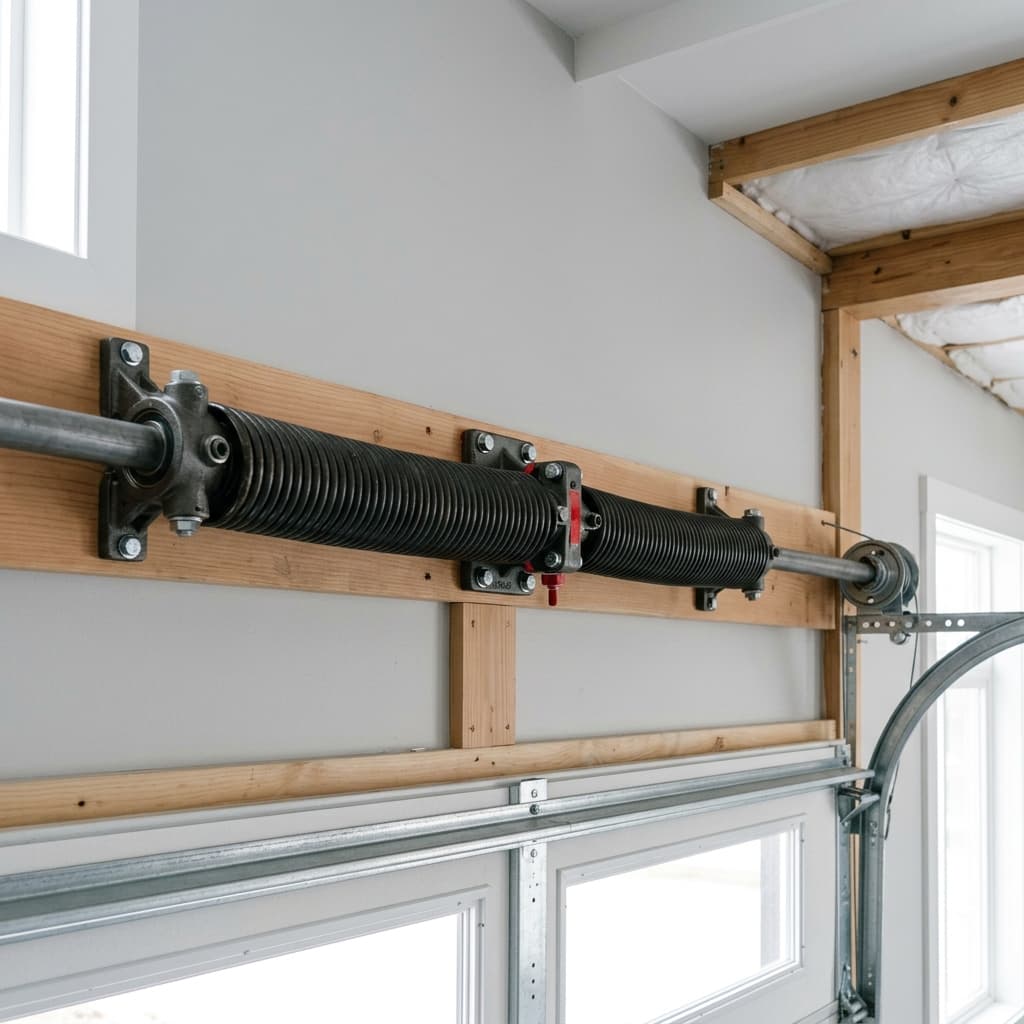
It is one of the most common residential service calls: a homeowner is about to leave for work, presses the button, and hears a sound like a gunshot echoing from the garage. The torsion spring has snapped. To understand why this happens, we must look at the mechanical physics of high-torque steel coils under cyclic loading.
The Structural Physics of Torsion Coils
A garage door spring is not a helper; it is a counterweight. The average double-car sectional garage door weighs between 150 and 300 pounds. To lift this weight, the torsion springs are wound tightly around a steel shaft during installation. Winding the spring stores mechanical potential energy in the form of torsional stress. The amount of torque generated is determined by:
- Wire Size: The diameter of the steel wire itself.
- Inside Diameter: The inner diameter of the coil cylinder.
- Spring Length: The overall length of the coiled wire.
Why DIY Spring Repair is Extremely Risky
Torsion springs store hundreds of foot-pounds of torque. Adjusting them requires placing winding bars into the winding cones. If a winding bar slips, or if you use an incorrect tool like a screwdriver, the high-tension spring will unwind instantly and violently. This can shatter hands, break wrists, or cause fatal injuries. Torsion springs must always be adjusted or replaced by certified professionals using proper high-load tooling.